
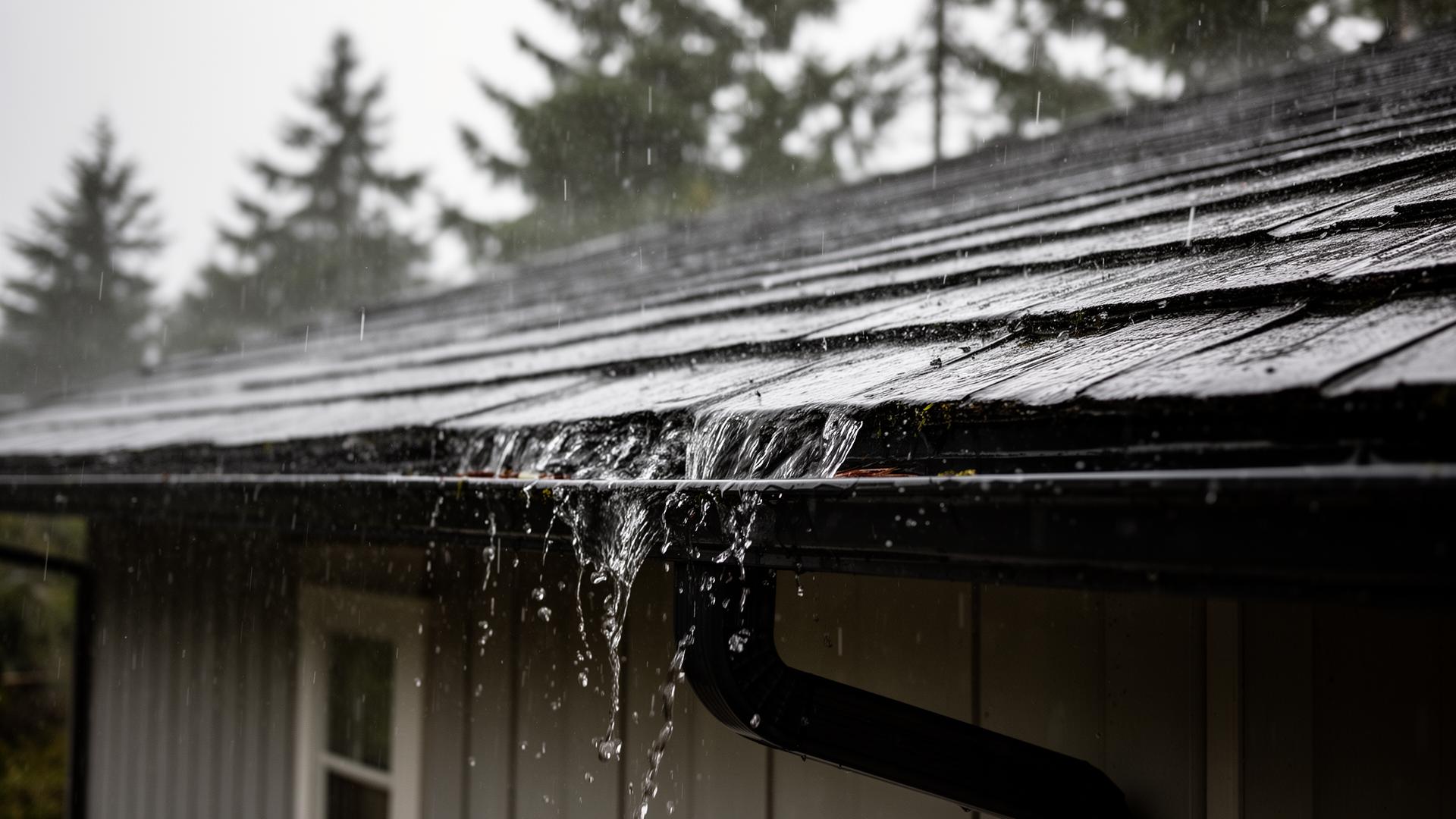
A roof in the Lower Mainland works harder than most. Prolonged rain, gusty winds, salt air close to the coast, persistent shade, and occasional freeze-thaw cycles all act on the same assembly — and as a roof ages, the margin it has to absorb that stress shrinks every year. Understanding what coastal BC weather actually does to an older roof helps owners recognize problems earlier and plan replacements before damage spreads.
Rain that never really stops
Surrey, White Rock, and the rest of the Lower Mainland see long stretches of light to moderate rain rather than short, dramatic storms. That sustained exposure tests every seam, valley, flashing, and penetration. On a newer roof, sealed details shed water reliably. On an aging roof, small lifts or gaps that would dry quickly in a sunnier climate stay wet for days at a time — and water always finds the weakest point.
Wind-driven rain
Coastal wind does not have to be dramatic to cause problems. Moderate gusts driving steady rain force water sideways into shingle laps, under flashings, and behind wall transitions. Older shingles with weakened sealing strips, or flashings that have been resealed multiple times, are the first to let water through.
Moss, algae, and persistent moisture
Our climate is ideal for moss and algae, especially on shaded north-facing slopes and under tree cover. Light surface growth is mostly cosmetic. Mature moss is not:
- It lifts shingle edges, breaking wind and water seals
- It holds moisture directly against the surface, accelerating granule loss
- Its roots can intrude between shingle layers
On an aging roof, heavy moss often signals that the shingles can no longer shed water the way they were designed to.
Salt air near the coast
Properties close to the ocean — particularly in White Rock and South Surrey — experience a more corrosive environment. Salt accelerates rust on exposed metal: vents, flashings, fasteners, and gutters. On older roofs, that corrosion is often the first visible failure, even when shingles still look reasonable from the ground.
Freeze-thaw cycles
We do not have prairie winters, but we do have nights when temperatures cross the freezing mark and days when they recover. Each cycle expands and contracts water held in micro-cracks and behind flashings. On a roof with brittle shingles or aging sealants, this stress turns minor imperfections into open paths for water.
Sun, UV, and thermal stress
Coastal weather is wet, but our summers also bring strong UV. Asphalt shingles lose oils and granules over years of UV exposure, becoming more brittle. Heat cycling on a roof deck with poor ventilation accelerates that aging — which is why two roofs of the same age can be in very different condition depending on attic airflow.
Why aging roofs fail faster in our climate
A new roof has multiple lines of defense — shingles, underlayment, sealed flashings, ventilation, drainage. As it ages, each of those layers weakens. Coastal weather doesn’t add new failure modes so much as it exploits the ones that age has already created. That’s why a roof that might last 30 years in a drier inland region can be at the end of its working life at 20–22 years here.
What this means for replacement timing
For homeowners and strata councils, the practical takeaway is to plan replacement based on observed condition, not just calendar age. After a roof passes 18–20 years in our climate, an annual professional inspection is a reasonable investment — it usually catches problems while they’re still repairable and gives you a realistic window to plan the larger project.
When to Call True North Strong Contracting
If your roof is more than 18 years old, exposed to heavy rain, shade, salt air, or coastal wind, and you’re seeing the signs above, it’s worth a closer look before another wet season passes. True North Strong Contracting can assess how coastal weather has affected your specific roof and recommend a clear path forward — whether that is targeted repair, planned full roof replacement, or, for multi-unit buildings, strata roof replacement planning aligned to your depreciation report and budget.