
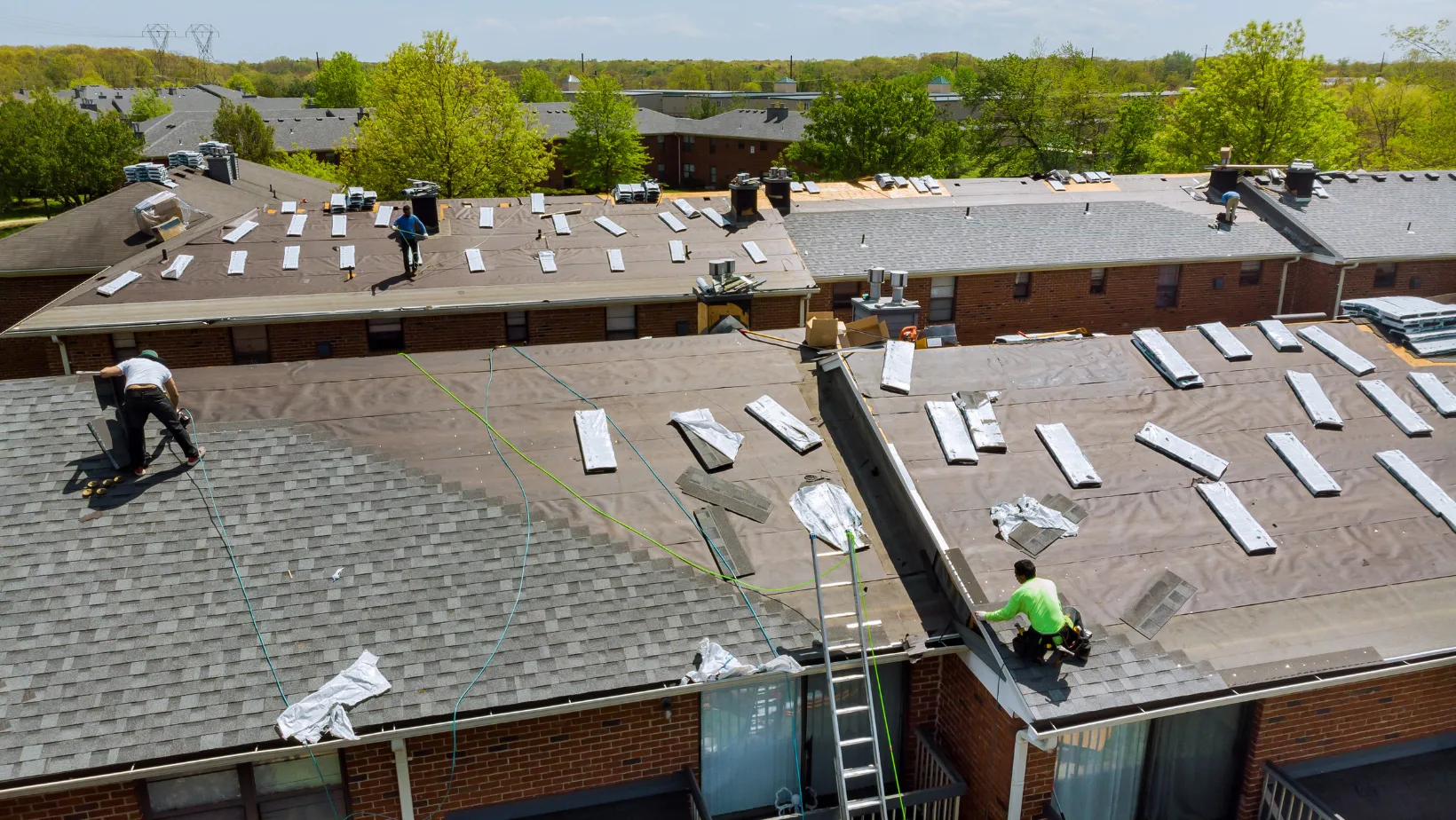
A strata roof is shared infrastructure. Every decision lands on every owner, every reserve-fund forecast and every future council. That means the work needs a technical scope you can defend at an AGM, a schedule that respects the way people actually live in the building, and a contractor who shows up when they said they would. True North Strong Contracting runs strata roofing projects for councils, property managers and multi-unit owners across Surrey and the Lower Mainland.
Whether the property needs a condition review, a few targeted repairs or a full multi-building reroof, we start with the site. Roof types, building access, parking, the depreciation report timeline and how much the reserve fund can carry this year all shape what we recommend. Councils get options, not a take-it-or-leave-it number.
Strata roofing services we provide
We cover both the right-now problems and the longer reserve-fund work. Depending on the property, that includes:
- Roof condition assessments — every building walked and photographed
- Leak investigation, temporary protection and permanent repairs through unit access
- Preventive maintenance and a prioritized repair list for council
- Full reroofs on townhome complexes, low-rise apartments and mixed-use sites
- Phased replacement by building or roof zone when the reserve fund needs it spread out
- Pitched asphalt shingle and metal, plus low-slope torch-on SBS and TPO membrane work
- Coordinated fascia, sheathing and exterior repairs while we are already on site
- Closeout documentation council can keep on file for future decisions
Working with strata councils and property managers
Strata projects have more people at the table than a single-family reroof. Council usually needs to weigh immediate repairs against a full replacement, line the work up with the depreciation report, get owner approval at a special general meeting and make sure the bids on the table actually cover comparable scopes. A cheap number with a vague scope is what creates change orders and angry owners later.
We build our assessment and proposal around the decisions council actually has to make. That means priority areas, system options with real cost implications, a phasing recommendation when it helps, an allowance for hidden deck rot so there are no surprise invoices, and a written plan for how connected exterior work would tie in if council wants to bundle it.
If it helps, we will walk the proposal through with the council or property manager in plain language — no specs jargon, no upsell. The point is a shared understanding so bids can be compared apples to apples and so owners get a consistent story.
Strata roof assessments and maintenance planning
A real assessment looks at surface wear, the history of past repairs, drainage paths, every penetration, all the flashings, transitions between building sections, and any visible signs of moisture intrusion. On a complex with eight or twelve buildings, conditions are rarely uniform — north-facing slopes carry more moss, west-facing roofs get hammered more by wind-driven rain. We document the differences instead of pretending the whole site has aged identically.
Targeted maintenance and roof leak repairs can hold things together while a capital project moves through the strata process. Maintenance cannot reset the service life of a failed system though, so we are clear about which work is genuinely extending the roof and which is just delaying an unavoidable replacement.
Developing a clear replacement scope
A strata roof proposal worth comparing should describe everything: tear-off, deck inspection and rot allowance, ice and water shield, underlayment or membrane, every flashing, ventilation upgrades where they are needed, all penetrations, drains and scuppers on flat sections, site protection, disposal, cleanup and what happens if we open the deck and find damage. Clear scope is the only way council can fairly judge competing bids.
Materials get matched to the building. Townhome pitched roofs usually run architectural asphalt shingle or standing-seam metal. Apartment flat roofs run torch-on SBS or TPO membrane. Mixed-use sites need both, integrated so the transitions actually hold up. Workmanship and material warranty coverage should be in the proposal before council votes on anything.
Planning, budgeting and phased work
Council decisions have to fit governance and funding cycles — special levies, reserve-fund draws, AGM timelines. We explain scope options in language that travels well from the council table to the owners. Pricing is built around the actual property, not a generic per-door shortcut, because roof geometry, access, staging and shared transitions vary a lot building to building.
Phasing works when buildings or roof blocks are genuinely separable and the deferred areas can hold for the agreed timeline. It can also cost more when you add up extra mobilizations, repeat dumpster fees and re-staging materials. We will lay out the real numbers both ways so council can decide which trade-off they prefer.
Planning a multi-building site
Before mobilization we map out material delivery, dumpster placement, the equipment plan, parking impact, building entrances and emergency access routes. Sequencing the work building by building keeps the site readable for residents and keeps trades from walking through finished zones unnecessarily.
Resident communication and minimizing disruption
Residents care about three things: when can they park, when will the noise be over their unit, and is the patio furniture going to survive the week. We pre-write the notice templates with the property manager, post visible signage at the work area, and update the schedule if weather pushes us. Pet owners, shift workers and anyone with a balcony garden gets the heads-up they need ahead of time.
Roofing is loud. Pretending otherwise just makes residents angrier. Honest notices a week ahead, daily clarity on which building is up next, and clear boundaries around the active work zone are what keep complaints down.
Safety, compliance and site control
Multi-unit sites put workers right next to occupied homes, kids on walkways and cars in the parkade entrance. We plan the work zones, fall protection, material handling and debris paths to fit the property, and we expect residents to respect the posted boundaries. Anyone walking through an active drop zone is dangerous to themselves and everyone working.
All roofing work follows WorkSafeBC and applicable building requirements. Where a project needs permits, engineering input or specialty review (parapets, structural deck replacement, anything code-driven), we flag it early and coordinate the right professional rather than guessing.
Leak response and repair records
Water can travel across decks, framing and insulation a long way before it appears in someone's unit. Effective investigation usually means looking at the exterior and the interior together. Unit history, prior repair tickets and photos all help. For urgent leaks, temporary protection holds the line until we can do permanent work in dry conditions.
For recurring leaks, council should keep a tight record — date, weather, affected unit, what was done. Patterns become obvious over a couple of seasons and that record makes the eventual capital decision a lot easier to defend to owners.
Connected exterior and structural work
Once we are on the roof we routinely find rotted fascia or soft sheathing that should be dealt with at the same time. Rather than send another contractor through six months later, our general contracting and structural work in Surrey team folds that in. Exterior painting can ride the same lift access if the schedule lines up.
Project documentation, warranties and follow-up
At completion, the strata gets a closeout package: signed contract, approved change orders, invoices, product data sheets, the manufacturer warranty, our written workmanship warranty and project photos. Warranty terms depend on the materials and the approved scope, so this file should live in the strata's permanent records.
Closeout is also the start of ongoing asset care. Future inspection notes, maintenance work and any leak reports should be added to that same file so the next council inheriting the roof actually knows what they are looking at.
Recent Strata Roofing Projects
The following are representative of strata roofing work True North Strong Contracting supports across the Lower Mainland. Details are illustrative; actual proposals are prepared after a site-specific assessment.
Surrey
Townhome complex — asphalt shingle replacement
A 24-unit townhome complex with multiple pitched roofs showing widespread granular loss and valley wear. Scope included full tear-off, deck inspection, synthetic underlayment, new architectural shingles and upgraded ventilation. Phased by building to preserve resident access and parking.
Outcome: Full replacement
White Rock
Low-rise condominium — low-slope membrane system
A three-storey condominium with low-slope decks experiencing recurring leaks around parapets and drains. Assessment identified compromised membrane seams and inadequate flashing heights. Scope included removal, substrate repair, new modified bitumen membrane and updated drain details.
Outcome: Full replacement
Langley
Mixed-use strata — phased shingle and flat roof work
A mixed townhome and low-rise building complex with varying roof ages and conditions. Council needed to stage work across two fiscal years. Phased scope prioritized the most deteriorated pitched roofs in year one, with flat membrane sections and remaining townhome blocks in year two.
Outcome: Phased replacement
Strata roofing service areas
We work on strata and multi-unit properties in Surrey, South Surrey, Delta, Langley, White Rock and across the Lower Mainland. For sites with several buildings, send us the property address, rough unit count, roof types and what is driving the call. That gets us prepared for a useful first conversation instead of a generic intake.
Start with a site meeting
Whether council is reacting to recurring leaks, lining things up with the depreciation report or planning a full reroof, the first step is the same: get someone qualified on the property to look at it. Request a strata roofing consultation and tell us how many buildings, units and roof types we are looking at.