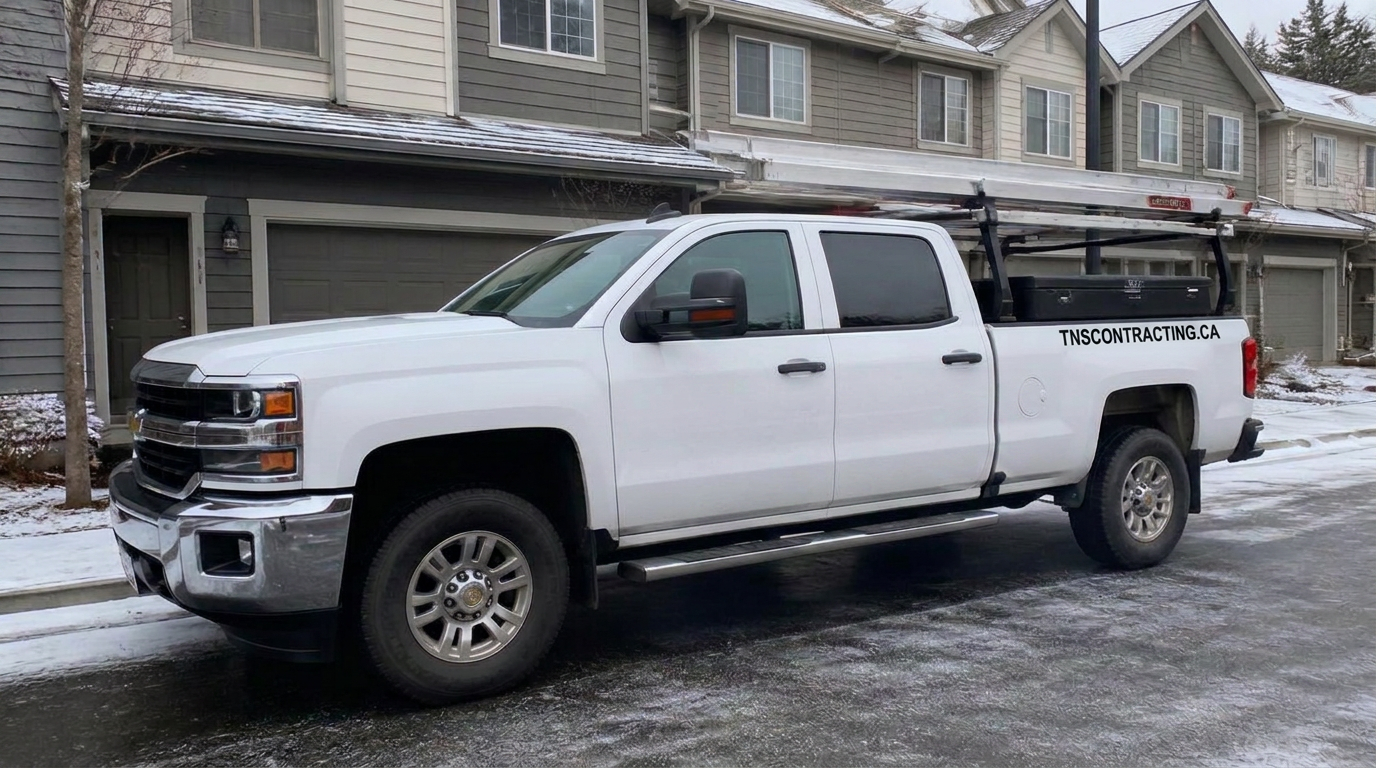
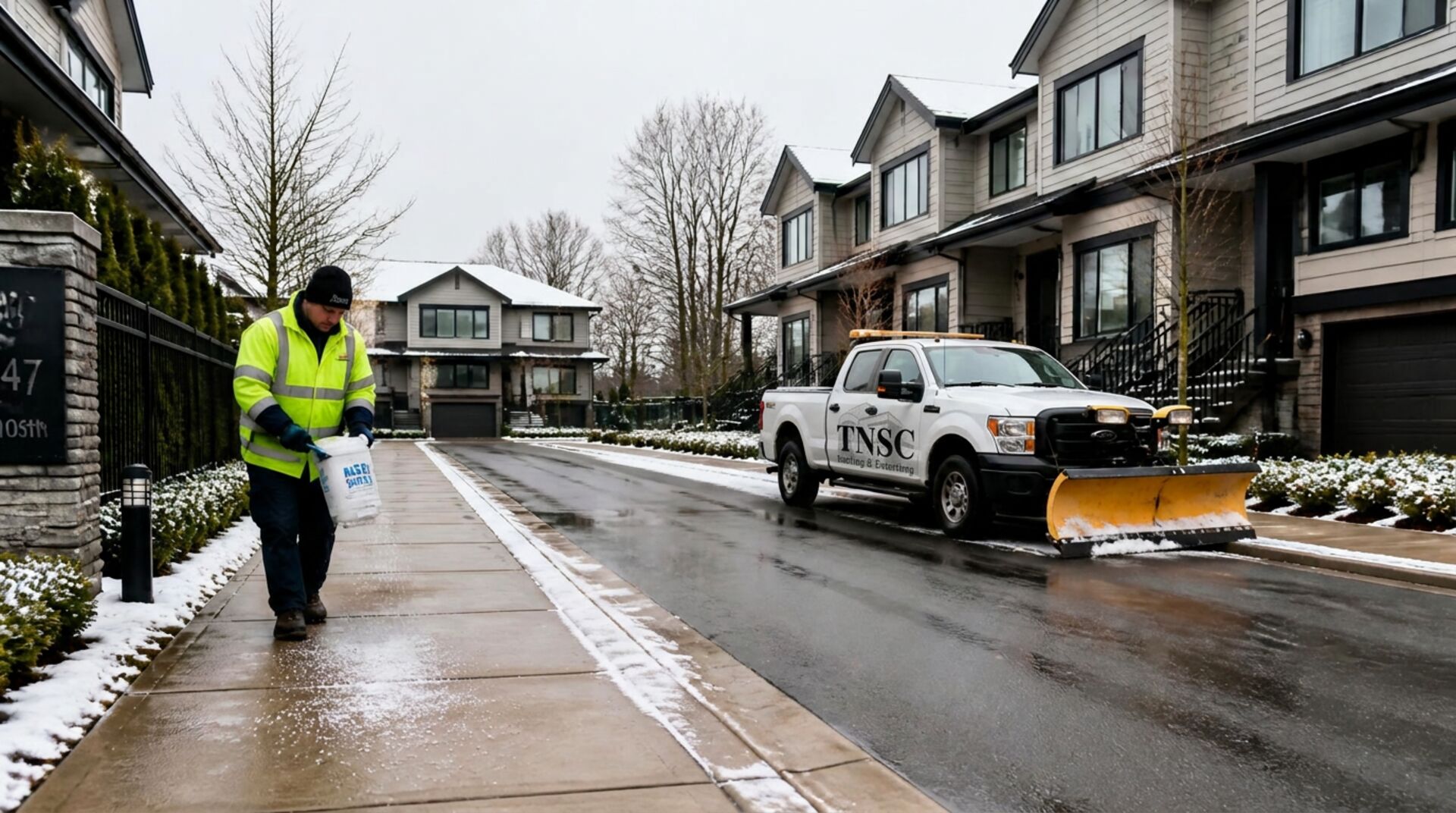
Lower Mainland snow is unpredictable. Most winters are mild, then one storm in January dumps 30 cm overnight and every contractor's phone rings at once. The strata complexes that come through those weeks cleanly are the ones with a contractor already on standby — not the ones starting the search at 6 a.m. on snow day.
Snow clearing and load management
We clear roofs, valleys, gutters and downspouts using methods that do not damage the membrane and do not concentrate heavy snow piles over framing that was never designed for it. Crews coordinate with caretakers so paths and entries stay clear between visits instead of refreezing overnight.
Salt and ice-melt application
Targeted calcium chloride or magnesium chloride at entries, walkways, ramps and parking — enough to keep people on their feet, not so much that planters and concrete take damage. On roofing surfaces we use products and quantities that work with the membrane, not against it.
Ice-dam prevention and drainage
Ice dams form where attic heat loss, weak ventilation and freeze-thaw cycles meet snow cover. We clear the dam, check the drainage path, and flag whether the underlying cause is ventilation, insulation or roof detailing so council can plan a real fix instead of paying for the same emergency call every February.
Service options that fit the property
Seasonal contracts for planned winter coverage, per-visit pricing when you want flexibility, or hourly dispatching during an active weather event with a three-hour minimum. Strata, multi-residential, industrial and commercial sites are all supported.
Clear dispatch triggers
De-icer is dispatched when temperatures sit at 0°C or below with precipitation in the forecast. We pre-treat during frost, ice or snow warnings, and clear snow with de-icer application once accumulation reaches two inches or more. No guessing, no waiting for a phone call.
Seasonal programs for strata councils
Before the first storm we set the trigger conditions, response times, materials approved for the property and a single point of contact. When the weather hits, no one is scrambling — we are already on the call list.
Communication before and after every event
We email your point of contact before dispatching — for example, when the forecast calls for early-morning rain with temperatures below zero, you will know crews are applying de-icer ahead of the event. Service logs and site photos can be provided after each visit for an added administrative fee, giving you records for operations, resident updates and internal documentation.
Site-friendly de-icer
Our premium pet-friendly de-icer is safer for concrete and landscaping — a good fit for managed properties where residents, pets and shared walkways matter. A standard de-icer is also available as a more economical option.
Documentation for council records
Every visit gets date-stamped notes: conditions on arrival, areas cleared, materials applied, anything that concerned us. Reports are written so they can go straight into council minutes or an insurance file if there is ever a slip-and-fall claim.