
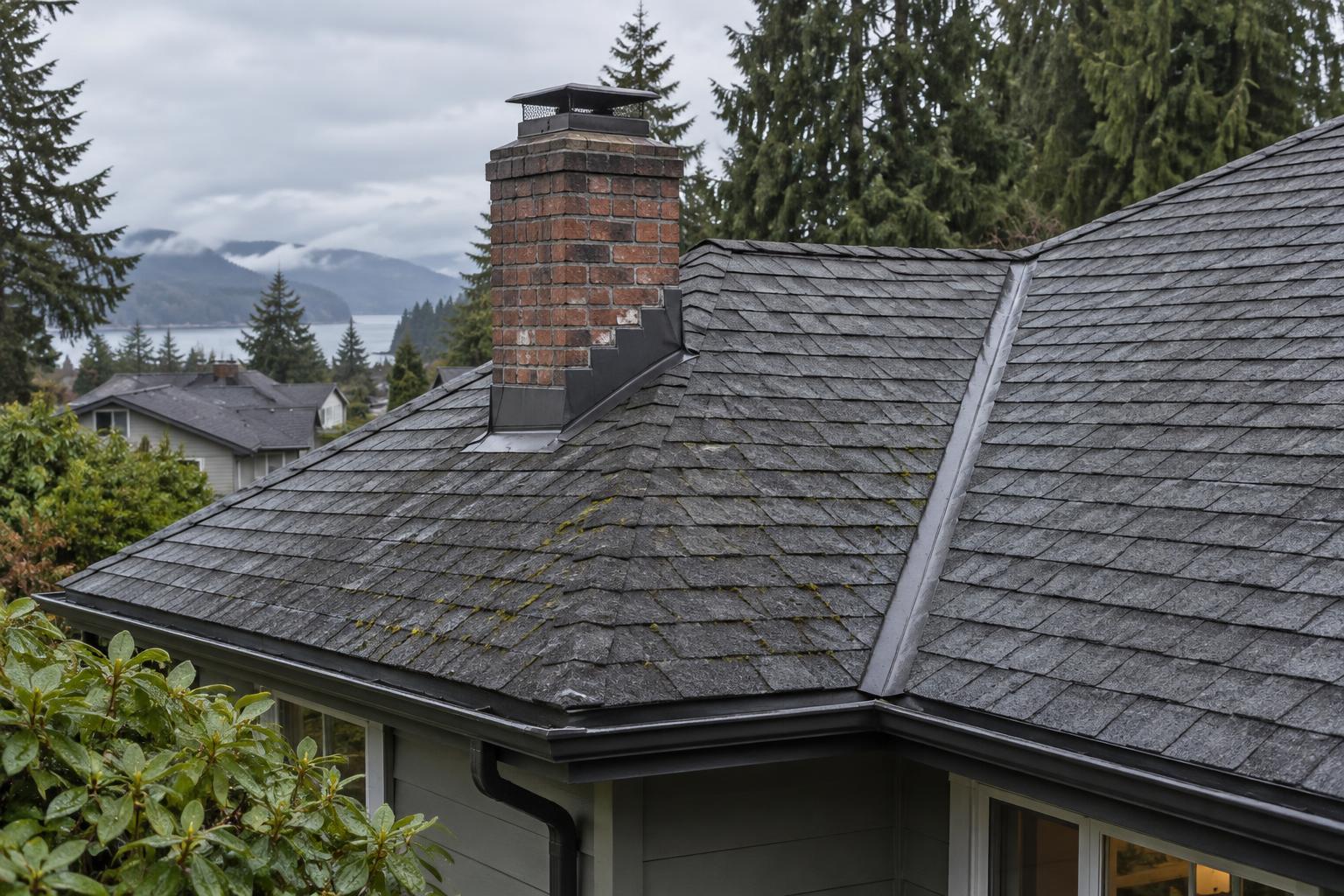
A leak doesn't automatically mean you need a new roof, and chasing one repair after another isn't always saving you money. The answer comes down to where the problem is, what the rest of the roof looks like, and whether a fresh repair can actually tie into everything around it without creating a new weak spot.
When a repair is the right call
We'll recommend a repair when the damage is in one defined area, the rest of the roof still has real life left, and we can match materials cleanly. Wind damage to a few shingles, a failed pipe boot, a flashing pulled away from a wall — these are typical repair jobs.
- The surrounding shingles still seal and flex without cracking
- We can identify the actual entry point, not just guess at it
- Compatible materials are still available for the existing roof
- No spongy or rotted decking under the affected area
- The repair won't create a transition that fails in the next storm
A proper roof repair assessment looks past the stain on your ceiling. Water travels along framing and underlayment before it shows up indoors — the leak is rarely directly above the drip.
When replacement is the better spend
When wear is across the whole roof, when you're getting leaks in different spots over consecutive winters, or when the roof is in the last few years of its life anyway, repeated repairs are just buying time at increasing cost. In those cases a full replacement is the more honest answer.
- Shingles cracking or losing granules across the whole field
- New leaks every winter in different units or rooms
- Multiple flashings rusted through or pulled away
- Soft decking or visible moisture damage from the attic
- Past repairs that are already lifting or won't hold a new tie-in
- Ventilation problems baked into the original assembly
Five questions we walk through with owners
1. How old is the roof?
Age matters but doesn't decide it. A 10-year-old roof with a bad install can be done. A well-cared-for 25-year-old asphalt roof on a sheltered house can still have time.
2. Is the problem in one spot or everywhere?
One spot points to repair. Symptoms across multiple slopes or units point to a system-level issue.
3. What does the deck look like?
Wet insulation or rotted decking changes the math fast. Sometimes we only know once we lift a few shingles.
4. Can a repair tie in cleanly?
Brittle 20-year-old asphalt cracks the moment you lift it. Sometimes the repair itself causes more damage than it fixes.
5. How long do you plan to own the property?
If you're selling in spring, a repair to get through the listing is reasonable. If you're there for another decade, a replacement may be the cheaper number over time.
Signs the patching has stopped paying off
You've already paid for two repairs and water found a new way in
When leaks keep moving, the underlayment and decking are usually worn across a bigger area than any one patch can cover. Each repair fixes a spot. The roof keeps failing around it.
The shingles around the damage are failing too
A patch is only as good as the shingles it bonds to. If the field around it is brittle, curling or dropping granules into the gutters, new shingles won't seal down properly and will move differently than the old ones beside them.
Shingles, flashings, vents and gutters are all due at once
These pieces age at roughly the same rate. When two or three of them need attention, doing it as one project is almost always cheaper than paying for separate visits and separate setups.
A simple cost rule we use
If the repairs coming up add up to roughly 25 to 30 percent of a full replacement, and the roof is already in its last stretch of life, replacement is usually the better spend. You stop putting money into a roof that's coming off soon and start fresh with new materials and a workmanship warranty.
Look at the full scope, not just the bid number
The cheapest quote often skips the parts that matter most — full deck inspection, underlayment grade, proper flashings (not caulking), ventilation upgrades, real cleanup, and a workmanship warranty backed by a company that'll still be here in five years. Ask what's actually in the scope.
For strata properties, the conversation also covers funding, phasing, owner notice, and access. Our strata roofing team helps councils frame the options against the whole property, not just the building that leaked first.
We do both, so we can be straight with you
TNS does repairs and full replacements. That means there's no built-in reason to push you one way or the other — we recommend what the roof actually needs.