
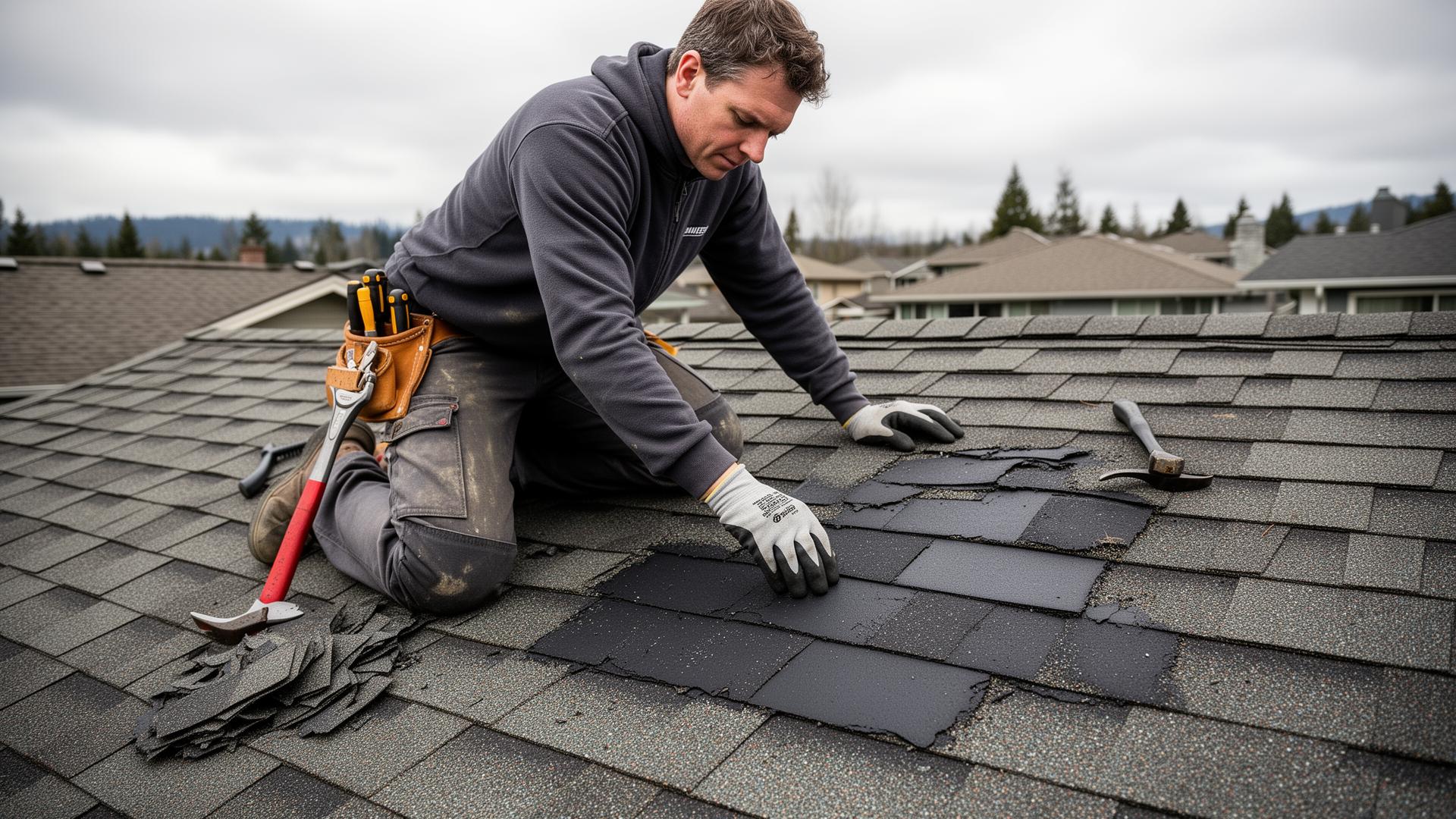
A targeted roof repair is often the right call. A single damaged shingle, a lifted piece of flashing, or one cracked pipe boot can usually be fixed without disturbing the rest of the roof. But there comes a point on every aging roof where another patch stops being a repair and starts being a delay tactic.
Here is how Surrey and Lower Mainland homeowners can tell the difference — and recognize when a patch job is no longer enough.
When repair is genuinely the right answer
Repairs make sense when the damage is localized, the surrounding material is still in good condition, and the roof has plenty of service life remaining. Examples include:
- Storm damage limited to one slope or one area
- A single failed flashing detail or vent boot
- An isolated leak with a clearly identified cause
- Wear that is confined to penetrations, not the field of the roof
In these cases, a quality repair on a sound roof can buy many more years of reliable service.
Signs a patch job is no longer enough
Leaks keep coming back — or appear in new spots
When you have already paid for one or two repairs and water is finding new ways in, the underlayment and decking are usually compromised across a larger area than any single patch can address.
The surrounding shingles are also failing
A patch only performs as well as the shingles it bonds to. If the area around a damaged spot is brittle, curling, or shedding granules, new shingles will not seal properly and will move differently than the older field around them.
The roof is past 80% of its expected life
Spending several hundred or several thousand dollars on a roof with only a year or two of life left rarely pays back. At that stage, putting those dollars toward planned roof replacement in Surrey is usually the stronger decision.
Multiple systems are aging together
Shingles, underlayment, flashings, vents, and gutters tend to age at similar rates. When two or three of these are due for attention, addressing them in one project is almost always less expensive than doing them piecemeal.
There is visible damage to the deck
Soft spots, sagging, or rotted sheathing mean the issue is no longer at the shingle layer. Repairs over compromised decking do not last, and ignoring the deck risks more expensive interior damage.
How to think about cost
A useful rule of thumb: if the cost of upcoming repairs reaches 25–30% of the cost of a full replacement on a roof that is already near the end of its lifespan, replacement is usually the better long-term value. You stop investing in a system that is going to be torn off soon and start a fresh service window with new materials and a workmanship warranty.
What to expect when you transition to replacement
A planned replacement gives you predictable scheduling, the chance to choose better materials, and the ability to address ventilation and flashings as part of one coordinated project. For multi-unit buildings, the same principles apply on a larger scale during strata roofing projects where coordinated work avoids repeat mobilizations.
When to Call True North Strong Contracting
If you are unsure whether one more repair is reasonable or whether it is time to plan a replacement, an honest, on-site assessment is the fastest way to get a clear answer. TNS Contracting will tell you when a repair is genuinely the better choice — and only recommend full roof replacement when the condition of the roof supports it. For strata councils and property managers, we can also frame the decision in the context of strata roof replacement planning so the recommendation fits the building’s long-term capital plan.