
Asphalt shingles are the most common residential roofing material in Surrey, and for good reason — they are cost-effective, well-suited to our climate, and straightforward to maintain. But every shingle roof eventually reaches the end of its working life, and the warning signs usually appear well before a major leak does.
The signs below help homeowners in Surrey and the surrounding Lower Mainland tell the difference between a roof that still has years left and one that is approaching replacement.
How old is the roof?
Architectural asphalt shingles installed in our climate typically last 20 to 30 years. Older 3-tab shingles often reach only 15 to 20 years. If your roof is approaching that range and you are noticing other issues from this list, that combination matters more than any single symptom.
Visible surface wear
Curling, cupping, or clawing shingles
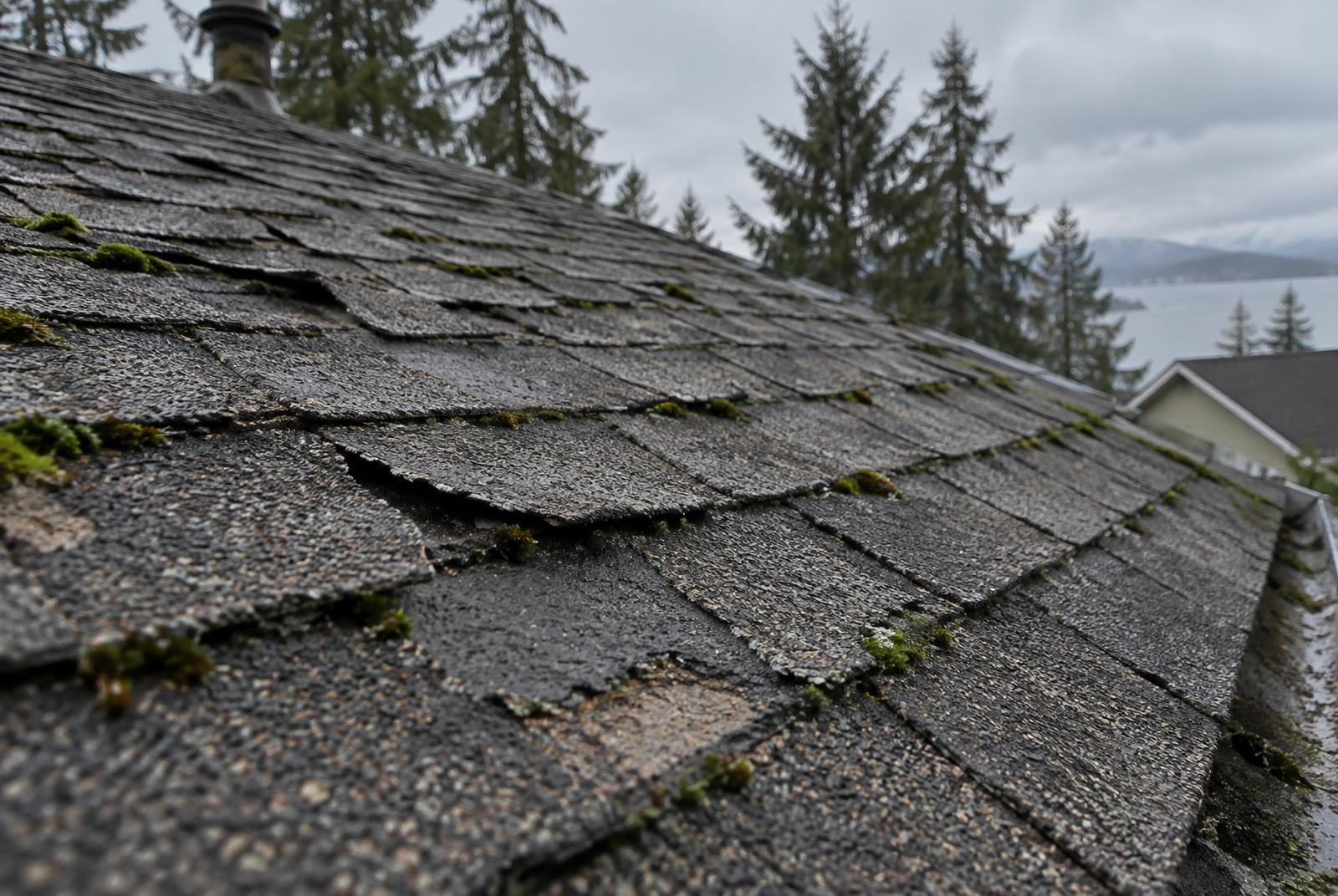
Shingle edges that lift, curl upward, or pull away from the roof are a strong signal of age, heat damage, or poor attic ventilation. Once curling is widespread, sealing strips no longer hold reliably and wind-driven rain can find its way underneath.
Cracking and brittleness
Cracks across many shingles — not just one or two — usually mean the asphalt has lost the oils that keep it flexible. Brittle shingles break instead of bending and are no longer reliably waterproof.
Granule loss
Granules protect the asphalt from UV and impact. Small amounts of granules in gutters after a new install are normal, but heavy accumulation, bald patches on the roof, or dark shadow lines visible from the ground point to a roof that is shedding its protective layer.
Flashings, valleys, and penetrations
In Surrey’s wet climate, flashings around chimneys, skylights, walls, and plumbing vents do as much work as the shingles themselves. Rusted, lifted, or repeatedly resealed flashings, deteriorated pipe boots, and worn valley metal often appear at the same time as shingle wear and are common entry points for water.
Repeated or shifting leaks
One leak usually has one cause. Repeated leaks in different locations, or stains that reappear after previous repairs, suggest the underlying system has reached the limit of what spot repairs can solve. At that point, additional patching tends to delay rather than prevent further damage.
Moss, dark streaks, and persistent moisture
Shaded roofs in Surrey, White Rock, and South Surrey often develop moss and algae. Light growth can be managed, but thick moss lifts shingle edges and holds moisture against the surface. When growth keeps returning aggressively on an older roof, it usually means the surface is no longer shedding water properly.
Sagging, soft spots, or daylight in the attic
Any visible sag along a roofline, a spongy feel underfoot during inspection, or daylight showing through the roof deck from inside the attic is a serious sign. These usually indicate moisture has reached the sheathing and the assembly — not just the shingles — needs attention.
Rising energy bills and attic temperature swings
A failing roof and aging ventilation often go together. If upstairs rooms have become noticeably hotter in summer or colder in winter, that can indicate the roof assembly is no longer performing the way it should.
When to Call True North Strong Contracting
If your asphalt shingle roof is more than 18–20 years old and showing several of the signs above, it is worth having a professional take a closer look before the next wet season. A property-specific assessment can tell you whether targeted repairs still make sense or whether a planned full roof replacement service will be more cost-effective over the long term.
True North Strong Contracting works with Surrey and Lower Mainland homeowners every week and can walk you through the condition of your roof in plain language — without pressure. When you are ready, we can scope the project, explain material options, and put a clear plan in front of you.