
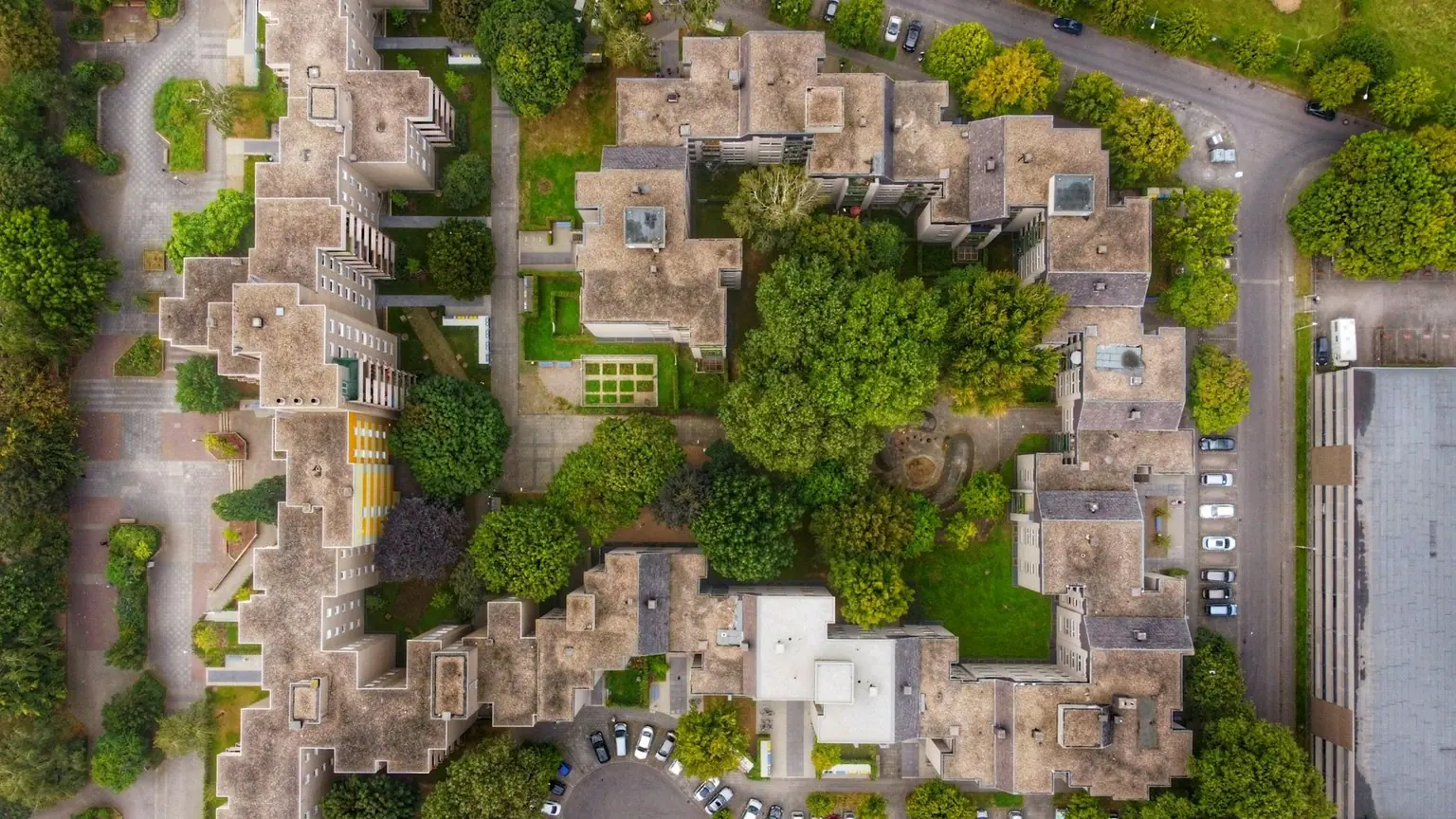
Strata roof maintenance falls apart when it gets treated as twelve separate buildings instead of one property. The councils we work with longest in White Rock, Coquitlam, and South Surrey have one thing in common: shared records, consistent zone names, and a clear contact path between council, the property manager, and us. That's it. The rest is just showing up on the schedule.
Map the property before anyone goes up
Even when every building went up in the same year, conditions vary a lot. South-facing slopes weather faster. North-facing ones grow moss. Buildings near the treeline get debris in valleys. Label buildings and roof zones consistently — Building 3 North, not "the one near the visitor parking" — and use those labels in every report, photo, and work order from then on.
What we look at on a strata inspection
- Visible wear and any localized damage on each roof zone
- Flashings, penetrations, valleys, and wall transitions
- Gutters, downspouts, and any drain or scupper on flat sections
- Past repairs and any unit with a leak history
- Signs of moisture or deck movement from accessible attic spaces
- Related fascia and exterior items that affect the roof
The report tells you what needs fixing now, what to monitor, and what belongs in the next depreciation cycle. Council shouldn't have to interpret it.
Keep records council can actually use
Inspection reports, photos, approved proposals, invoices, warranty docs, and a leak history — all in one place. When the council turns over, the new members can read what decisions were made and why. When you ask for competing proposals, they're all working from the same conditions instead of guessing.
For every leak: unit number, date, weather, where the water showed up, what we did temporarily, what the final repair was. Patterns become obvious when the data is in one place — and patterns are how you tell a one-off failure from a system-level problem.
Communicate with residents before they call council
Maintenance touches patios, balconies, parking, and sometimes attic access. Notice should go out with the dates, the work zones, what residents are responsible for (moving patio furniture, for example), and a single contact path — usually through the property manager. When that's clear up front, the noise complaints and panicked emails drop off sharply.
Connect maintenance findings to your depreciation report
Maintenance gives the depreciation report something real to work from. We'll show you which buildings are aging faster than others and which can wait, with examples from past strata roofing projects we've completed in the area. Repairs can manage near-term risk while council prepares for replacement — but they shouldn't be sold to owners as "we just got another 10 years out of it" when that isn't true.
When phasing comes up, the question is whether the roof zones can actually be separated without leaving a bad transition between an old and new section. Our strata roofing service covers assessment, repairs, phasing review, resident communication, and full replacements.
Start with a property-wide assessment
Tell us how many buildings, what roof types, which units have reported leaks, and what records you already have. Request a strata roof assessment and we'll come back with a maintenance and repair priority list council can actually vote on.