
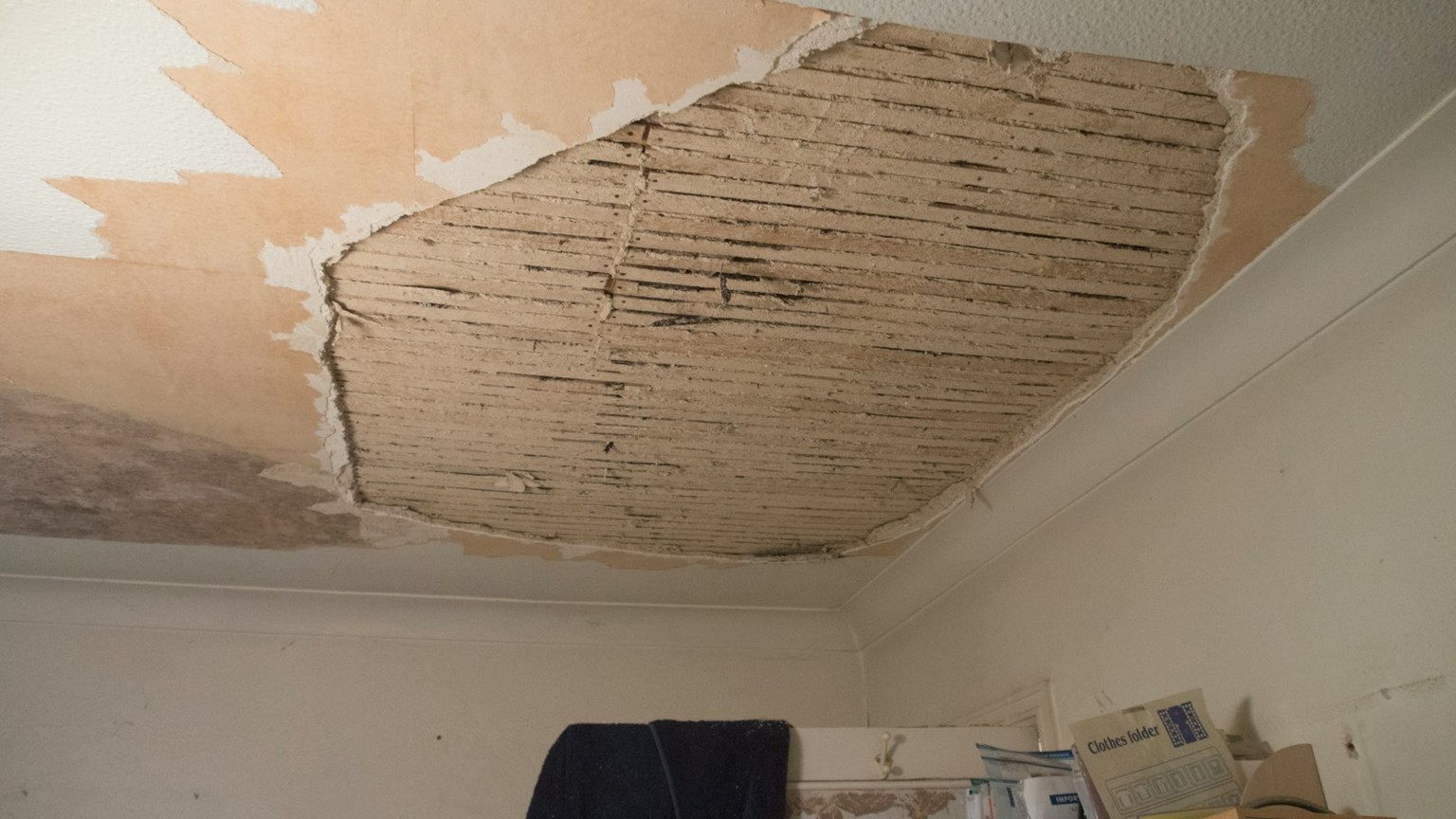
If water is coming through your ceiling right now, don't climb up to look for it. Wet roofs in our climate are dangerous, and the leak is almost never directly above the drip — water travels along framing and underlayment before it shows up indoors. Take care of what's happening inside first, then call us.
1. Get people away from the wet area
Move kids and pets out. If water is anywhere near light fixtures, outlets, or your electrical panel, treat it as an electrical hazard and don't touch either the water or the device. If a fixture is sparking or your breaker is tripping, call your electrical provider's emergency line.
Don't climb into the attic to chase it if footing is wet, the lighting is bad, or insulation is soaked. And don't go on the roof — that's how people end up in the ER.
2. Protect what you can inside
Move furniture, electronics, and rugs out of the area. Put down a real container (a mixing bowl beats a coffee cup) under active drips and set towels around it. If you see the ceiling bulging, stay clear — that's pooled water above the drywall and it can let go fast. Some people poke a small hole with a screwdriver to drain it into a bucket and stop the ceiling from collapsing, but only if you're comfortable doing it.
3. Document it before it dries
Take photos and a short video of the water, the stains, and any damaged belongings. Note when it started, what the weather was doing, and whether this spot has leaked before. That detail saves time when we get there and helps if you're filing insurance.
4. Call us
Tell us your address, what kind of roof you have if you know, where you're seeing water, and whether it's still actively dripping. Call at (604) 375-8672 or request help online.
During a real windstorm or heavy rain, we won't put a crew on a wet roof — nobody safely patches a roof in those conditions. We'll talk through whether a temporary tarp makes sense and book the real repair for the next safe weather window.
What not to do
- Don't go up on a wet, mossy, or storm-damaged roof
- Don't stand under a bulging ceiling without draining it
- Don't touch wet electrical fixtures
- Don't assume the leak is directly above the stain
- Don't slap roofing tar or "leak stop" coating up there — it complicates the real repair
- Don't hide wet drywall or insulation before we can look at it
How we actually find the source
Water can enter at a vent boot, a wall transition, a valley, step flashing, a cracked shingle, or a clogged drain on a flat section, then travel three metres before it drops through a ceiling. We work from the indoor evidence outward — checking the obvious suspects first based on the layout of your house, then moving on if those check out.
Sometimes it isn't the roof at all. Condensation from poor attic ventilation, a plumbing vent issue, or water getting behind siding can all look like a roof leak. A proper assessment tells you what's actually wrong before we decide between a focused repair and a full roof replacement.
Repair or replacement?
Most single leaks on a roof that's otherwise in decent shape are a repair. If your roof is near the end of its life or you've had leaks in multiple spots, a replacement may end up cheaper than three more service calls.
After the work is done, keep the photos, invoice, and notes. If anything reappears in the same area, that history lets us go straight to it.