
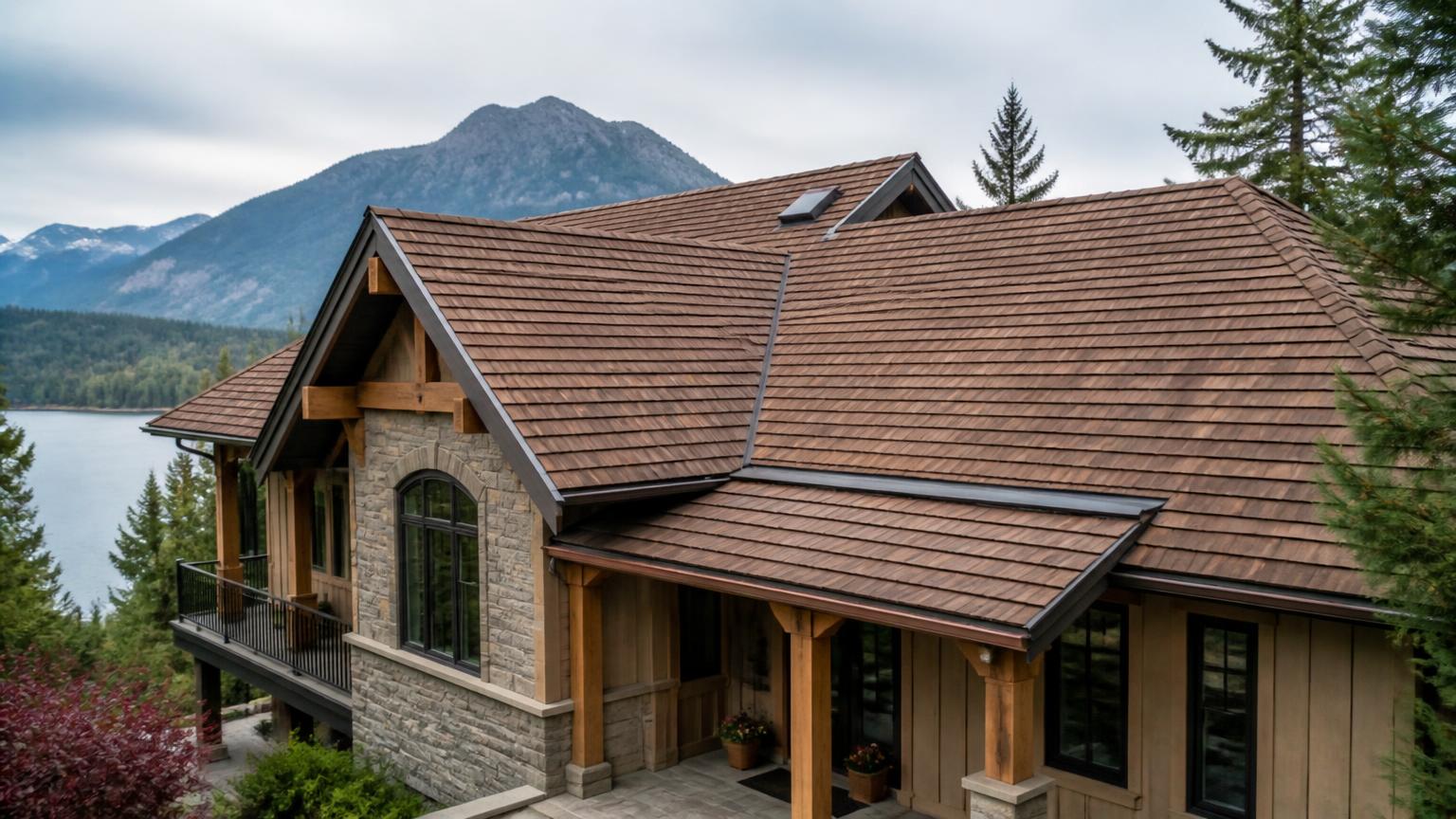
I won't ask your council to spend more on Brava just because the sample looks better on the boardroom table. I want to see what that extra money buys your building — in maintenance, in disruption to residents, and in when you'll be paying for the next roof.
Spend more upfront only if the numbers hold
The pitch you'll hear is simple: pay more now, save later. Sometimes that's true. But the comparison has to be honest on both sides. The most common mistake I see is assuming asphalt needs replacing or heavy servicing every year. It doesn't. Both systems need regular inspection. What they need beyond that depends on how they were installed and what the building throws at them.
So frame it properly: installed cost, scheduled maintenance, repair access, the cost of the next replacement, and how many weeks of scaffolding and noise your owners live with.
What Surrey rain and trees actually do to a roof
- Needles in shared valleys. Fir and cedar needles pack into valleys and gutters and push water sideways into laps and roof-to-wall joints. A new roof covering doesn't stop needles landing on it.
- Moss on asphalt. Moss lifts shingle edges, and granules wash into the gutters as shingles age. Dark algae streaks are a cosmetic problem; they aren't proof the roof is done.
- Marine air in South Surrey. Near the water, exposed fasteners and metal flashings corrode first. Judge durability by the whole assembly, not just the tile.
Brava changes the roof covering. It doesn't change the need to manage drainage, flashing and wind-driven rain across every building in the complex.
Compare complete installed systems, not samples
Compare a named Brava profile against a named Malarkey or GAF shingle — not "premium tile" against "basic shingle." Then price the same scope for both:
- Tear-off, disposal and deck assessment
- Underlayment, valleys and ice and water protection
- New step and counter-flashing at every wall, chimney and penetration
- Attic ventilation balanced across the affected units
- Access, staging and resident protection
Check slope limits, fastening requirements and the structure's suitability for the exact product before council shortlists it. And keep two warranties separate in the paperwork: the manufacturer's material coverage and our 10-year workmanship warranty.
Annual maintenance isn't annual repair
Give your property manager a side-by-side schedule: inspections, drainage cleaning, flashing checks and photo documentation for both materials. Brava isn't maintenance-proof — blocked gutters and failed adjoining details still cause leaks. And asphalt doesn't automatically mean a paid repair every year. For a rough planning figure, our strata maintenance programs run $0.22 to $0.43 per square foot annually, depending on the property.
Colour through the tile isn't proof of ten-year fade resistance
Cutting a tile in half and showing the colour runs all the way through is a good demonstration. It tells you that a chip or scuff won't show a different colour underneath. What it doesn't tell you is how the exposed surface weathers after ten years of UV and rain. Those are two separate questions.
Ask for weathering test data and warranty wording for the exact profile and colour being proposed. Then look at samples outside in daylight against your siding, and think about shaded slopes versus sunny ones, and how a replacement piece will match in year twelve.
Build a lifecycle budget council can defend
Use the same roof area and planning period for both options. Show installation, inspections, cleaning, repair allowances and replacement as separate lines. Run more than one scenario. Tie it to your depreciation report so predictable upkeep stays separate from the future replacement allowance. If the Brava savings only work under the most optimistic assumptions, council should see that.
Before changing materials, check whether repair will do
A ceiling stain doesn't locate the failure. Water runs down rafters and drips metres away from the failed step or counter-flashing. If the inspection shows a targeted flashing repair will reliably give the roof another five years, I'll tell your council that plainly. Where replacement is genuinely warranted, you'll get photographs of the deteriorated covering, deck damage or repeated failures — and a written explanation.
What belongs in the approval package
- A photographed condition report of the roofs as they are today
- Product specifications and verified colour information for each option
- Comparable written scopes for Brava and asphalt, with a fixed scope and no mid-project add-ons
- City of Surrey permit checks for the actual scope, and BC Building Code requirements
- Access, staging, weather protection and resident notices
- A maintenance handover so the property manager knows what to do next
Our Surrey strata roofing page covers how we run projects on occupied buildings.
Questions councils ask me
Will our strata save money choosing Brava over asphalt?
It may, but I won't promise savings until we compare complete installed scopes and realistic upkeep and replacement scenarios for your buildings. A higher purchase price only makes sense if the benefits hold up over council's planning period.
Do asphalt shingles need replacing or servicing every year?
No. Asphalt roofs don't need annual replacement, and an annual inspection doesn't automatically mean an annual repair. Budget for regular inspections and condition-based cleaning, with repairs driven by documented defects, not a blanket assumption.
Can we stop roof maintenance after installing Brava?
No. Fir needles, moss and heavy rain still affect valleys, gutters and the flashing around every wall and penetration. Brava roofs still need inspections and the right kind of cleaning.
If the colour runs right through a cut tile, will it barely fade after ten years?
A cut sample shows the colour inside that sample. It doesn't prove how the exposed surface weathers over ten years. Before council relies on a fade claim, ask for test data and warranty wording for the exact product and colour being quoted.
Several units have leaks. Does that mean we need a new roof?
Not on leak count alone. Water travels along framing, so several stains can trace back to a few failed details. If a targeted flashing repair will reliably add another five years, I'll say so. If replacement is warranted, council gets roof photographs and a written explanation.
Next step
Call Rodrigo at (604) 375-8672 to arrange a no-obligation property assessment, or request a written comparison. I'll help your council weigh repair, asphalt replacement and Brava with roof photographs and a written quote based on the building's actual condition.