
A roof that stays bone dry through a week of straight down drizzle can leak in the first hour of a southeast blow. Rain alone runs downhill. Rain pushed by 70 km/h gusts runs sideways and uphill, and it finds every lap, seam and nail hole that was only ever designed to shed water, not hold it back.
Why wind driven rain is a different problem
Shingles, flashing and vents all work by overlap. Water hits the top piece and rolls off the one below. When wind presses water against the roof, it gets driven back up under those overlaps. That is why our calls spike on the stormy days in November and January, not the merely wet ones. Exposed spots like the bluffs in South Surrey and White Rock, the open fields in Delta and Langley, and upper storeys facing the water take it worst.
Where it usually gets in
- Shingles with broken seal strips that lift and let water blow underneath
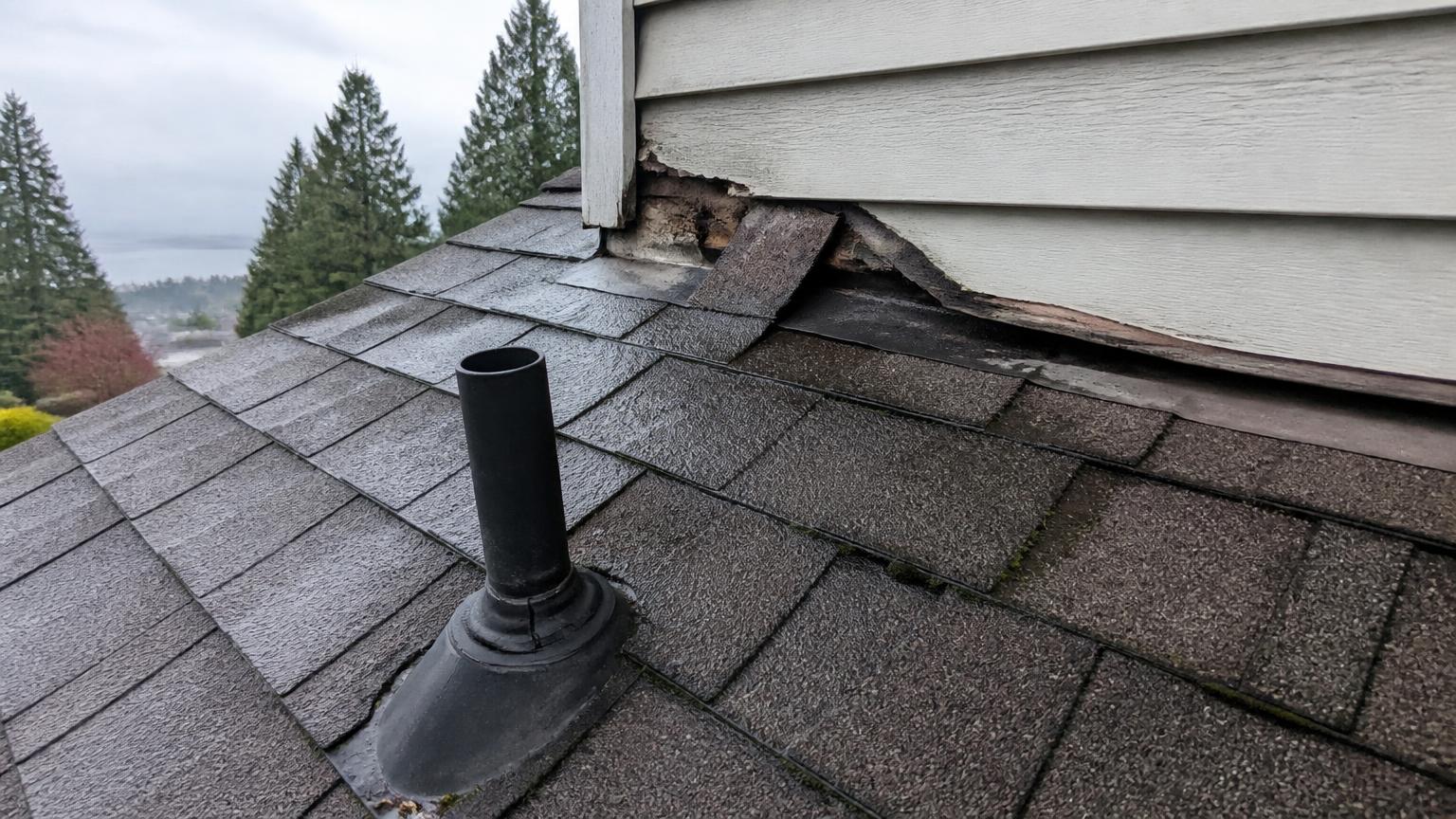
- Step and counter flashing at chimneys, sidewalls and dormers
- Plumbing vent boots with cracked rubber collars
- Box vents and exhaust caps facing into the prevailing wind
- Skylight curbs and older skylight seals
- Valleys packed with fir needles that dam water and push it sideways
- Gutters that overflow back behind the fascia
What to check after the storm passes
Stay off the roof. From the ground, look for lifted or missing shingles, shingle pieces in the yard, and trim or flashing that has moved. Inside, check top floor ceilings, around skylights and chimneys, and the top of exterior walls on the windward side. In the attic, if you can get there safely, look for damp insulation, water stains on the underside of the decking, and dark streaks around nails. A stain that only shows up after windy rain points straight at a flashing or vent problem, not a worn out roof.
Take dated photos of anything you find. Our windstorm roof check walks through the full outside inspection, and if water is coming in right now, follow the leaking roof steps first.
Repair or bigger conversation
Most wind driven rain leaks are a targeted repair: reseat or replace a run of shingles, rebuild a piece of step flashing, swap a vent boot. That is a same visit job in most cases. If the shingles are lifting all over the roof, the granules are gone, or the decking is soft when we walk it, patching just buys time until the next storm. Our guide on repair versus replacement lays out how we make that call honestly.
Get ahead of the next system
Clear gutters and valleys before the fall storms, have overhanging limbs trimmed, and get any lifted shingles sealed down while it is dry. Our roof maintenance program covers that pre season pass for homes and stratas.
Found a stain or a lifted shingle?
Call or text (604) 375-8672 or book a leak investigation. Send us your photos and we will tell you straight whether it needs attention now or can wait for a dry day.