
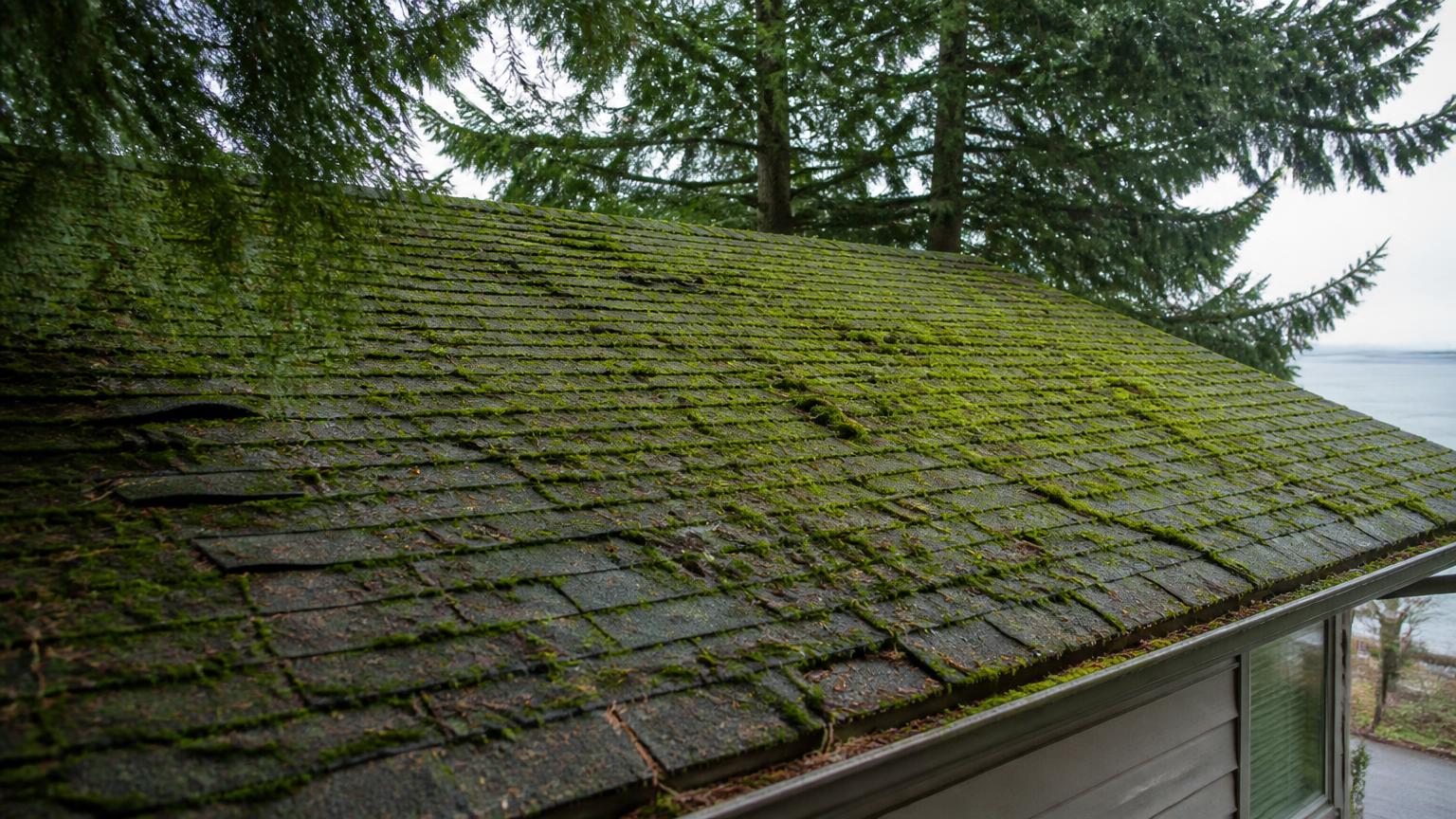
Moss is the single most common roof condition we find on Lower Mainland homes. Mild winters, long wet seasons and heavy tree cover give it close to perfect growing conditions, and a north-facing slope under cedars can go from a green tint to a thick mat in two or three years. It looks cosmetic. It is not.
What moss actually does to a roof
Moss holds water against the roof surface long after the rain stops. On asphalt shingles that constant dampness softens the mat, loosens granules and speeds the ageing you would otherwise get over decades. As the growth thickens it also creeps under the shingle edges and lifts them, which breaks the wind seal and opens a path for water to travel sideways instead of running off.
On cedar it keeps the wood saturated and encourages rot. On concrete tile and metal the damage is slower, but blocked valleys and clogged gutters still cause overflow at the eaves. Moss also traps needles and debris, which turns a small dam into a permanent wet spot.
How to tell whether it is a problem yet
- A green film or light fuzz in shaded areas — early, easy to treat.
- Clumps you can see from the street, especially along shingle lines — act this season.
- Shingle edges visibly lifted or curled around the growth — have it assessed.
- Granules collecting in the gutters or at the downspout outlet — the surface is wearing.
- Moss in the valleys or filling the gutter trough — water is already being redirected.
If the roof is also well into its second decade, moss is often a symptom rather than the main issue. Our guide to end-of-life warning signs covers what to look at alongside it.
Removal methods, from safest to most damaging
Treat and let it die back
The gentlest approach is a roof-safe treatment applied in dry weather, left to kill the growth, and then allowed to weather off over the following months. It is slower and looks worse for a while, but it does not disturb the shingle surface at all. This is what we recommend on most residential asphalt roofs.
Careful manual removal
Thick mats usually need to be lifted off before treatment can reach anything. Done properly this means working downward with soft tools and no scraping across the granule surface, combined with clearing the valleys and gutters at the same time.
Pressure washing — avoid on shingles
Pressure washing strips granules, drives water under the shingle courses and can void a manufacturer warranty. It leaves a roof that looks dramatically better for one season and measurably shorter-lived after that. If a contractor's plan for an asphalt roof is a pressure washer, get a second opinion.
Keeping it from coming straight back
Removal without follow-up buys about two or three years on a shaded coastal roof. The things that actually change the growing conditions are trimming overhanging branches to let light and air onto the roof, keeping gutters and valleys clear so the surface drains and dries, and clearing needle build-up each autumn. Zinc or copper strips near the ridge help on some roofs, though they only protect the slope directly below them.
Building this into a seasonal routine is far cheaper than reacting to it. Our coastal maintenance checklist sets out the rhythm for a single home, and our roof maintenance program handles it on a schedule for owners and strata councils who would rather not track it.
A word on safety
A mossy roof is genuinely slippery, and it stays slippery for days after rain. Most of the roof falls we hear about locally involve someone going up to deal with moss or gutters on a damp morning. Inspect from the ground with binoculars, and leave anything that needs foot traffic to a crew with fall protection.
When moss turns into a repair conversation
If growth has lifted shingles, sat in a valley for years, or shows up alongside interior stains, the moss is no longer the whole story — water has likely been getting past the surface. That is the point to have the roof looked at properly rather than cleaned. Our notes on where leaks actually start explain what we check for.
Cleaned early and kept clear, moss costs very little. Left for a decade, it is one of the quieter reasons a roof gets replaced years ahead of schedule.